
Assessment of the Socio-Economic Impacts of Investments Made in Connection with the Rotating 11 December National Celebrations

Key challenges identified included the centralization of the organization in Ouagadougou, the absence of key regional stakeholders within the National Organizing Committee (CNO), the limited involvement of other provinces in organizing the National Day celebrations, the inadequate budget allocated to the Regional Organizing Committee (CRO) and the late disbursement of funds, shortcomings in the appointment of the heads of certain committees, and the insufficient involvement of Civil Society Organizations (CSOs).

With regard to efficiency, several enabling factors contributing to efficient organization were identified during the preparations for the 11 December celebrations. These included, in particular, public procurement procedures that favored open competitive bidding and the streamlined arrangements put in place for issuing building permits. Conversely, the main sources of inefficiency included the limited involvement of regional directorates in monitoring infrastructure implementation, the existence of two organizing committees (the CNO and the CRO) with overlapping responsibilities, failure to meet implementation deadlines, and weak coordination among stakeholders, resulting in the reworking or deterioration of certain infrastructure projects.

Concerning the outcomes and impacts of the rotating 11 December celebrations, between 53% and 88% of respondents, depending on the sector considered, believed that the rotating organization of the celebrations had contributed to improvements in: (i) national pride and social cohesion; (ii) regional attractiveness; (iii) urban mobility; (iv) accommodation; (v) security; (vi) access to safe drinking water and sanitation; (vii) access to energy; and (viii) employment.

The findings were more mixed with respect to access to electricity, cultural activities, and income generation, with only 49.71%, 16.8%, and 21.9% of respondents, respectively, reporting improvements in these areas.

Overall, the impacts appeared to be less pronounced in the first regions to host the 11 December celebrations—namely Fada N’Gourma, Ouahigouya, and Bobo-Dioulasso. Similarly, the regions reporting the smallest improvements in the sense of national belonging were those where some misunderstandings had arisen regarding the distribution of infrastructure investments.
“Mana Mana” Operation: CAPES joins the Presidency of Faso and neighboring institutions to clean up and improve their working environment

Officially launched by the Burkinabè government on April 30 by Prime Minister Dr. Albert OUEDRAOGO, the “Mana Mana: My Patriotic Act for My City” Operation brought together all segments of society. Ministers, members of the defense and security forces, members of parliament, university students, school pupils, and many others, equipped with cleaning tools such as machetes, wheelbarrows, brooms, and rakes, took to several major streets of Ouagadougou to give the city a renewed appearance.

Planned to take place on the last Saturday of every month, the May edition was officially launched on Saturday, May 28, 2022, by Mathias TRAORE, Secretary General of the Presidency of Faso, for the staff of the Presidency and neighboring institutions. The event was attended by Jacques Sosthène DINGARA, Secretary General of the Government and the Council of Ministers, and mobilized employees of the Presidency of Faso and its affiliated institutions, including CAPES (Centre for the Analysis of Economic and Social Policies), as well as neighboring institutions such as the Directorate General of Treasury and Public Accounting, the Grand Chancellery, BF1 Television, and ARCEP.

According to the Secretary General of the Presidency of Faso, “this activity is a patriotic commitment, but it also contributes to beautifying the city and improving the cleanliness of both our living and working environments. It is also a physical activity that helps keep the body fit.” He added that Ouagadougou could one day become like Kigali, the capital of Rwanda and one of Africa’s cleanest cities, especially since a similar initiative already existed during the presidency of Thomas SANKARA, when regular environmental clean-up campaigns were encouraged.

Led by its Executive Director, Dr. Victor SANON, CAPES was determined not to miss the event. Like all the participating institutions, CAPES staff turned out in large numbers and made this activity a memorable success.

Inauguration of the New Headquarters

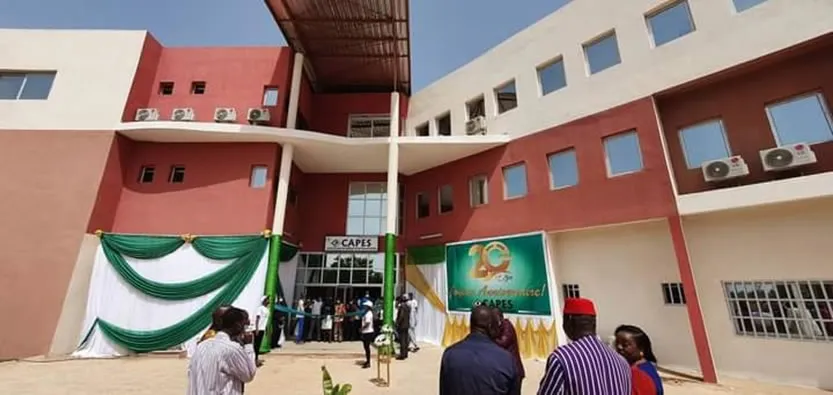
On Thursday, 19 May 2022, the Prime Minister and Head of Government, Dr. Albert OUEDRAOGO, officially inaugurated the new headquarters of the Centre for the Analysis of Economic and Social Policies (CAPES) by cutting the ceremonial ribbon.

The inauguration took place in the presence of former Executive Directors—Dr. Elie Justin OUEDRAOGO, Patron of the ceremony, Dr. Basga Emile DIALLA, and Professor Pato Daniel KABORE—as well as the current Executive Director, Dr. Victor SANON, the entire CAPES staff, and numerous distinguished guests. On this occasion, the institution’s new headquarters was officially opened to the public.

Built on a 1,200-square-metre site, the modern building, comprising approximately one hundred offices, welcomed the guests attending the ceremony. Constructed at a total cost of CFA francs 1.5 billion, the facility stands as a source of pride for CAPES and reflects the commitment of the Burkinabe authorities to further strengthen the institution’s role in guiding public development policies through strategic foresight and development planning. CAPES serves as a leading forum for in-depth reflection on the major issues facing Burkina Faso.

Celebrating 20 Years of CAPES: CAPES Expresses Its Gratitude

On Thursday, 19 May 2022, after officially opening the CAPES symposium, Prime Minister and Head of Government Albert Ouédraogo paid tribute to the distinguished service of the former Executive Directors of CAPES. Three of them were awarded Certificates of Recognition signed by the President of Faso and Head of State, Lieutenant Colonel Paul Henri Sandaogo DAMIBA, a gesture that reflected the Nation’s gratitude to its worthy sons.

Accordingly, Dr. Justin Elie OUEDRAOGO, Dr. Basga Emile DIALLA, and Professor Pato Daniel KABORE each received a Certificate of Recognition and a Trophy. These honours testify to the recipients’ outstanding contributions in shaping an institution that has become a benchmark of excellence, renowned for its objective analysis and forward-looking vision. CAPES embodies the ability to rise above divisions and to deliver objective, evidence-based outcomes that respond to the expectations of the nation.